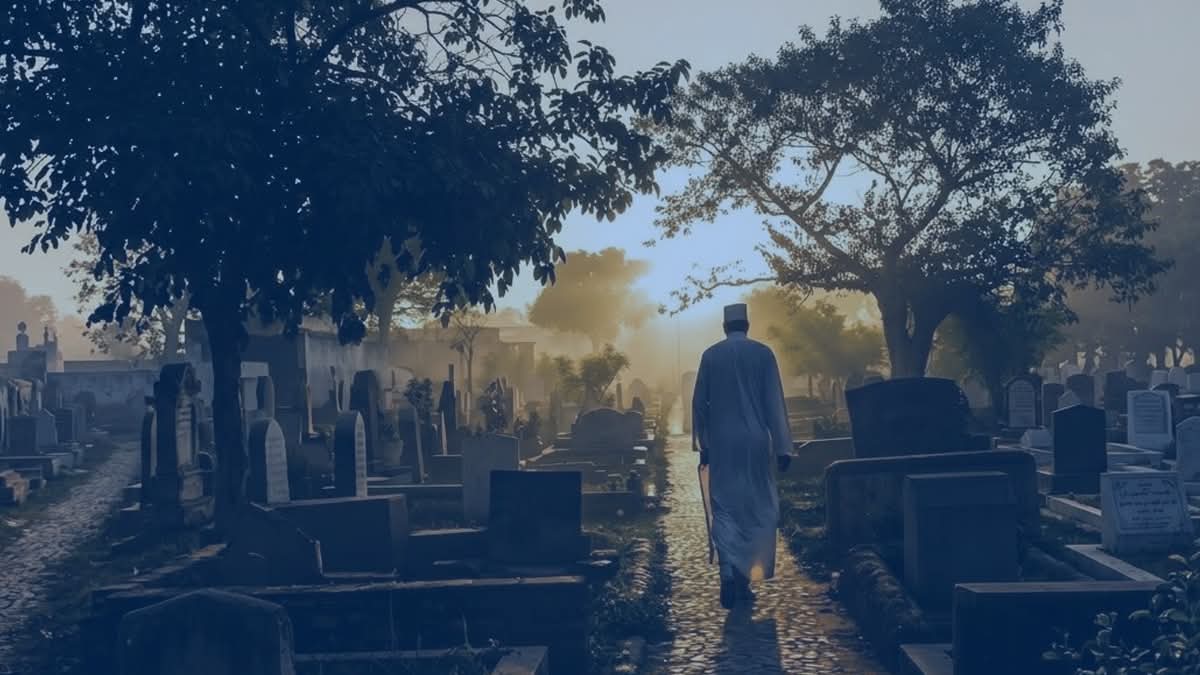

Watching injustice continue day after day can make the heart ache. When aggressors retain their power and others help them cause further harm, a painful question arises: when will Allah punish the oppressors? The suffering is real, and wanting it to end is a concern for justice.
Islam teaches us to look beyond the appearance of security. More time, greater influence, and protection from earthly consequences do not establish Allah's approval. A person can be moving deeper into ruin while believing that everything is going well. Understanding this warning helps us hold on to hope, respond responsibly to oppression, and examine the direction of our own lives.
We often recognise punishment through visible loss: power collapses, wealth disappears, or an aggressor is restrained. When none of this happens, it can seem as though wrongdoing has carried no consequence. Yet what we can observe is only part of a person's condition.
The Prophet Muhammad, peace and blessings be upon him, gave this warning:
الظُّلْمُ ظُلُمَاتٌ يَوْمَ الْقِيَامَةِ
Oppression will be darknesses on the Day of Resurrection.
Sahih al-Bukhari 2447
The warning reaches beyond the rise and fall of worldly power. An oppressor's present freedom does not settle the question of accountability. Human institutions may fail to restrain someone, but their failure cannot turn cruelty into innocence.
We cannot set a date for a particular person's downfall. We can recognise oppression as evil and refuse to mistake its continuation for proof that justice has ceased to matter. Confidence in Allah's justice gives us a reason to persevere when the outcome we long for remains out of sight.
Longer life and continued opportunity are easily mistaken for signs that a person is doing well. The Quran challenges that assumption directly:
وَلَا يَحۡسَبَنَّ ٱلَّذِينَ كَفَرُوٓاْ أَنَّمَا نُمۡلِي لَهُمۡ خَيۡرٞ لِّأَنفُسِهِمۡۚ إِنَّمَا نُمۡلِي لَهُمۡ لِيَزۡدَادُوٓاْ إِثۡمٗاۖ وَلَهُمۡ عَذَابٞ مُّهِينٞ
Let those who disbelieve never suppose that Our granting them respite is good for them. We only grant them respite so that they may increase in sin, and theirs is a humiliating punishment.
Surah Ali Imran 3:178
The verse speaks explicitly about those who disbelieve and warns against reading respite as a favourable verdict. More time can become the setting in which wrongdoing accumulates. The passing of another day does not erase what happened yesterday.
This matters when an aggressor grows bolder because other countries support or protect them. Political backing can help explain why violence continues; it cannot make the violence righteous. Continued killing adds further wrongdoing, even if the perpetrator celebrates the ability to carry it out.
The warning changes how we interpret apparent success. We should be concerned by a growing record of cruelty rather than impressed by the power that enables it. An aggressor may see expanding opportunity while moving further into the consequences of their own choices.
Some losses are inward. A person may retain comfort while becoming less troubled by wrongdoing, less willing to repent, and less attentive to Allah. Outward security can then conceal a serious spiritual decline.
Ibn al-Jawzi describes the danger with particular force:
أعظم المعاقبة أن لا يحس المعاقب بالعقوبة، وأشد من ذلك أن يقع السرور بما هو عقوبةThe gravest punishment is for the person being punished not to sense the punishment. Graver still is taking pleasure in what is itself a punishment.
The danger is the absence of alarm. Someone who recognises a wrong has a reason to stop. Someone who delights in the opportunity to repeat it may feel no need to change.
The sweetness of worship belongs in this discussion. Prayer, reading the Quran, and speaking to Allah in dua can bring a closeness that material comfort cannot replace. Losing concern for that closeness is a loss worth taking seriously.
The sweetness of intimate prayer
Ibn al-Jawzi preserves this admonitory account in Sayd al-Khatir, chapter 29, paragraph 149, without a chain of transmission. It is presented as an illustration, not as established divine speech or a Prophetic Hadith. وربما كان العقاب العاجل معنويًا، كما قال بعض أحبار بني إسرائيل: يا رب! كم أعصيك ولا تعاقبني! فقيل له: كم أعاقبك وأنت لا تدري! أليس قد حرمتك حلاوة مناجاتي؟ An immediate punishment may be inward. An Israelite scholar said, 'My Lord, how often I disobey You without Your punishing me!' He was told, 'How often I punish you while you do not know! Have I not deprived you of the sweetness of intimate prayer with Me?' The account invites self-examination about a loss that outward comfort can hide.
This calls for humility. A difficult period in worship, or a feeling of emotional distance, does not by itself prove that Allah is punishing someone. The useful response is to examine our choices and seek closeness to Him, while avoiding confident judgments about another person's unseen condition.
One consequence of wrongdoing can be an increasing readiness to repeat it. What first required an excuse becomes familiar. The next violation feels smaller, and the person becomes more willing to cross a boundary they once recognised.
Consider someone who harms another person and then lies to defend the act. Protecting the first wrong now involves a second. If others reward that behaviour or silence criticism, the person may become bolder. The appearance of getting away with it helps the pattern continue.
On a larger scale, support for an aggressor can encourage further violence. The growing ability to harm others should therefore be understood as a grave moral danger, whatever strategic advantage the aggressor claims. Each additional victim represents another wrong, never a reason to admire the perpetrator's strength.
The warning also reaches ordinary relationships. Cruel speech, unfair treatment at work, and taking advantage of someone who cannot answer back deserve attention before they become habits. Concern about distant oppression should sharpen our awareness of the power we exercise close to home.
It is easier to recognise another person's arrogance than our own excuses. The message becomes useful when we ask where we have grown comfortable with something we know is wrong. Have we dismissed someone's complaint because they lack influence? Have we repeatedly postponed putting a matter right?
Noticing a fault creates an opportunity to respond. Instead of treating discomfort as something to escape, let it lead to an honest decision. Repentance needs attention to the behaviour itself and, where another person has been harmed, to the wrong that needs repair.
- Name the wrong clearly instead of defending it through comparison with someone worse.
- Stop the behaviour and remove a practical opportunity that makes repeating it easy.
- Seek Allah's forgiveness and take concrete steps to restore rights or repair harm.
- Give prayer, Quran, and dua regular attention, even when the feelings you hope for are slow to return.
These steps are a beginning, not a claim that every difficulty has a single explanation. Self-examination should lead to sincere effort and hope. It should never become an excuse to blame people suffering under another person's oppression.
Faith in Allah's justice can sustain active concern for people who are suffering. Continue to make dua, support trustworthy relief efforts, and speak truthfully about injustice. Check information before sharing it, so that concern for the oppressed remains joined to honesty.
We do not have to know the date of an oppressor's punishment to know that cruelty deserves resistance and victims deserve care. Waiting for a visible downfall should not displace the help we can offer today. Nor should anger make us careless with the rights of others.
Hope rests on a deeper understanding of success. Power that enables further wrongdoing is no assurance of safety, and outward comfort cannot measure the health of a heart. Keep working for justice, guard your own conduct, and return to Allah with sincerity. Let the question of when accountability will come strengthen your commitment to doing what is right now.